
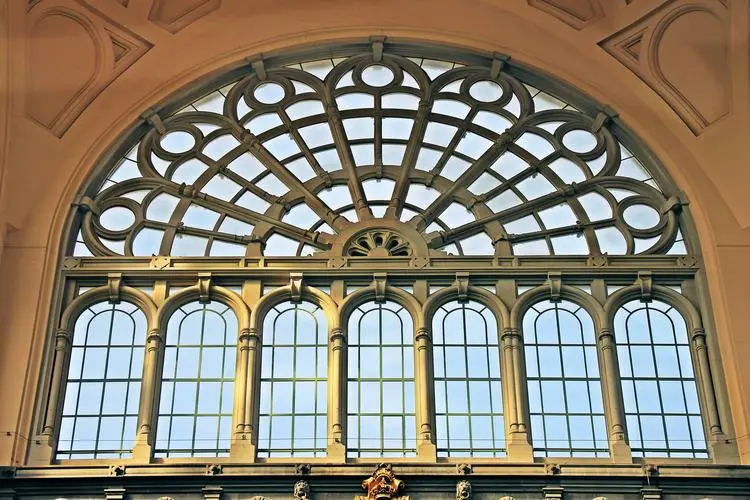
Net Zero has great relationship with architecture.Architecture is a practical and great artwork created by human beings. Whether in the city or in the countryside, people’s lives are inseparable from architecture. From home living space to work space, people go back and forth between various buildings. Under the protection of architecture, people’s survival and life are better protected.
Architecture, if we talk about its vague beginning, can be traced back to 100,000 years ago. When Homo sapiens began to live a nomadic life of hunting and gathering, they built some temporary huts with local materials to shelter from the wind and rain. Over the past 100,000 years, as humans have continued to develop, architecture has also continued to develop based on people and keep pace with the times. However, the mission of architecture is no longer just to continuously meet people’s needs for a comfortable life, but also to meet deeper social and environmental needs.
In recent years, extreme climate has occurred frequently. While people are aware of the harm caused by extreme climate, they have also realized the root cause of its occurrence – excessive carbon emissions.
Carbon emissions continue to increase, leading to rising global temperatures, which in turn causes a certain degree of imbalance in the earth’s climate. To put it more simply, human activities have caused the continuous outbreak of extreme climate, and we can also think that this is the earth giving us some warnings.

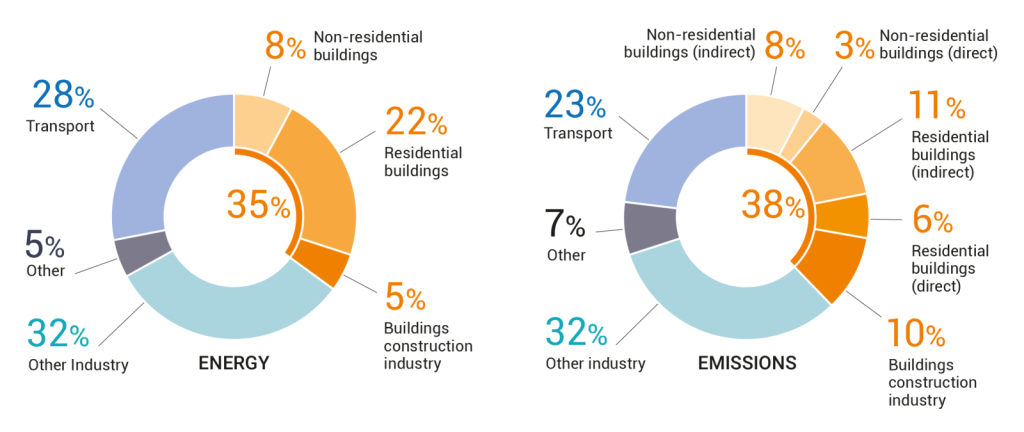
Among the carbon emissions generated by human activities, buildings can be said to be at the forefront. According to the “2019 Global Building and Construction Industry Status Report” released by the International Energy Agency (IEA) and the United Nations Environment Program (UNEP), emissions from the global construction industry increased by 2% from 2017 to 2018, reaching an all-time high. The construction industry accounts for nearly 40% of energy and process-related carbon dioxide emissions. According to the “China Building Energy Consumption Research Report (2020)”, the total carbon emissions from the entire construction process in 2018 were 4.93 billion tons, accounting for 51.3% of the country’s carbon emissions.
As an indispensable part of people’s lives, buildings provide people with a living environment for survival. At the same time, in order to improve the environmental comfort of the building space, people continue to iterate and update the buildings. Especially after the industrial revolution, buildings have entered a period of barbaric growth. Although the environment in the space has become more comfortable, the pollution to the external environment has become more serious.
However, the comfort of the small environment cannot be improved at the expense of the large environment. Because of this awareness, various types of green and low-carbon buildings have emerged, which not only meet and improve the comfort of the space, but also curb the problem of building energy consumption.
The contributions of architecture in Net zero emission is decreasing building energy consumption and improve building energy performance.
Architectural design should be based on building functions and environmental resource conditions, with climate and environmental adaptability as the principle, and the goal of reducing the annual heat consumption for heating and cooling of buildings. It should make full use of passive building design methods such as natural lighting, natural ventilation, and thermal insulation of fence structures to reduce the building’s energy demand.
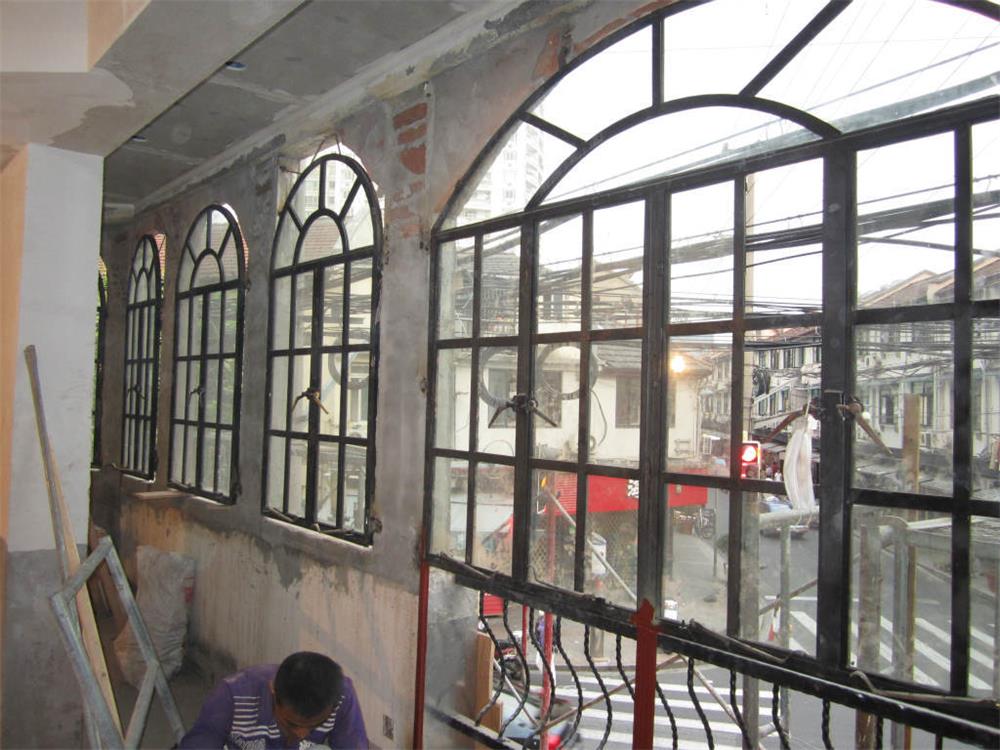
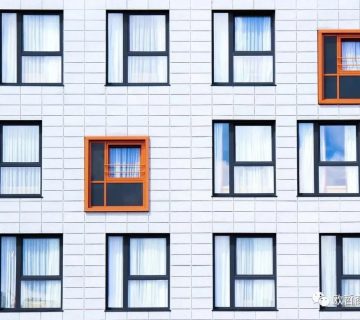
For historical buildings, the energy waste are mainly caused by low energy efficient windows and glass which cannot prevent heat transfer the windows and glass .The windows and glass technology developed really fast in past decades and compared with windows and glass 30 years ago,windows and doors in the 2020s performance has decreased to only 20-30% of that 30 years ago. By replacing existing windows and doors to upgraded windows with high performance low-E glass.Even if customers cannot replace the historical windows, replacing the monolithic glass to newest vacuum insulating glass,can also decrease the overall building energy consumption.
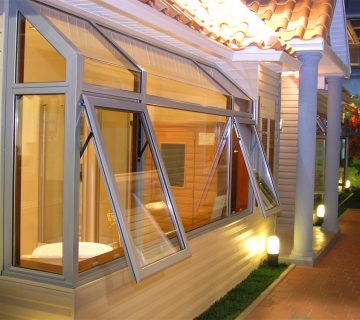
For new buildings,by increasing the windows performance specification,whether overall U value, or SHGC,to avoid using low price,low quality windows,and adopting passive house windows to maximum decrease the energy performance, and use clear energy for example installing solar panels on building roof, using energy saving heat and cooling equipment.Even though the initial investment is higher,but these measures can continuously decrease the energy consumption during the building lifetime.
Vacuum glazed windows is a combination of high performance system windows and vacuum insulating glass,to create the ever lowest U value,and create quiet living environment and improve living comfort.
With elegant design,strict material selection and management,systemized production, the windows has reached the ultimate whether in structural performance and energy performance,creating a comfortable living environment,contribute to the carbon reduction.
Can you be more specific about the content of your article? After reading it, I still have some doubts. Hope you can help me.
Thanks for sharing. I read many of your blog posts, cool, your blog is very good. https://www.binance.bh/register?ref=IHJUI7TF
I don’t think the title of your article matches the content lol. Just kidding, mainly because I had some doubts after reading the article.
Can you be more specific about the content of your article? After reading it, I still have some doubts. Hope you can help me. https://accounts.binance.com/id/register-person?ref=OMM3XK51
Interesting read! Keep the quality posts coming.
Really helpful post, thanks for sharing https://www.doujin-pc.org/ this with us.
Solid write-up, exactly what https://javhappy.site/ I was looking for.